Introducing Trinket: A Two-Month Cat Introduction Journey

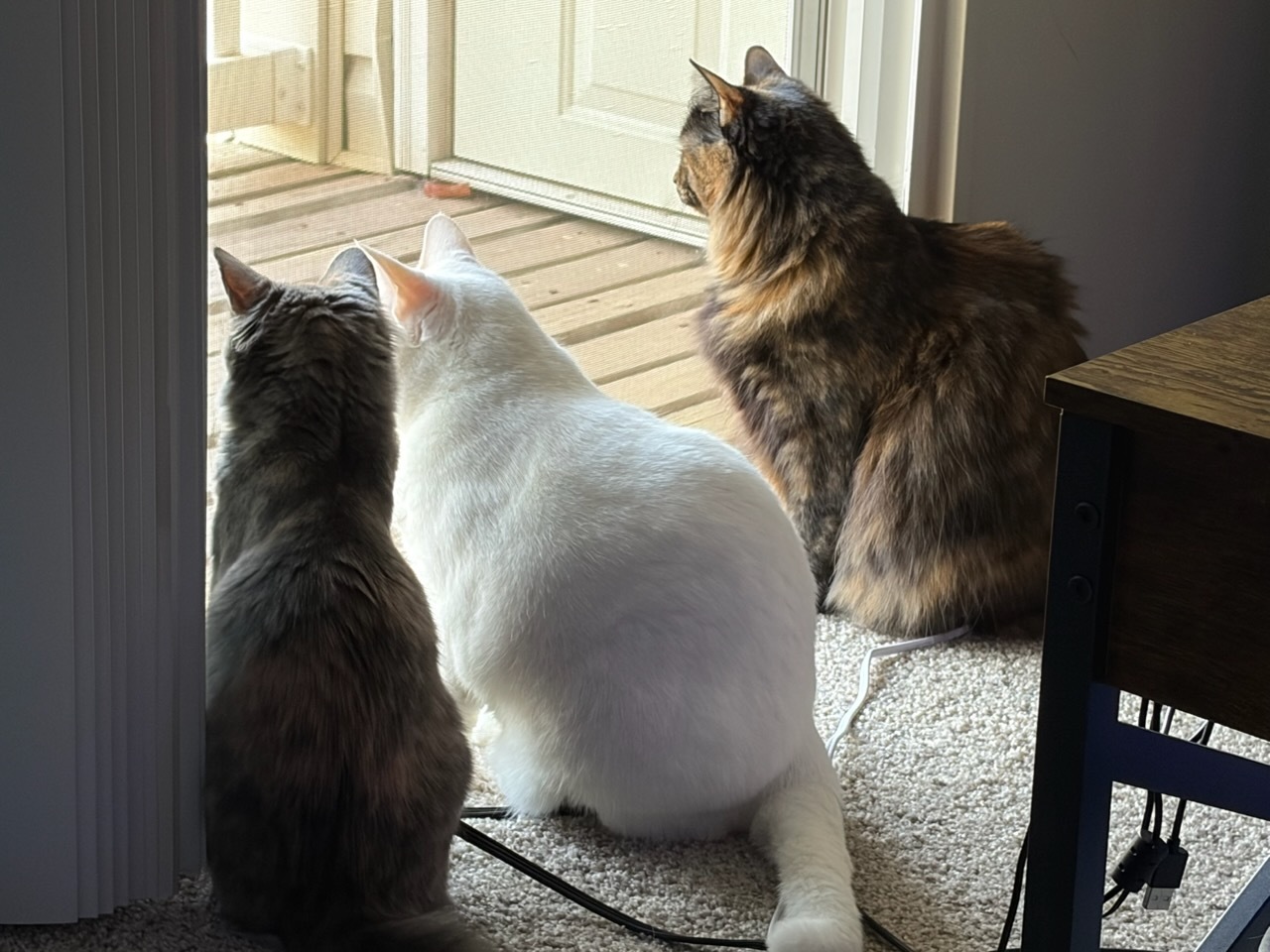
Bringing a new cat into a home with resident cats takes patience, flexibility, and a willingness to let the cats set the pace. Here's a real-life timeline of how Trinket was successfully introduced to Calcifer and Bagel over the course of approximately two months.
First Weekend of February: Bringing Trinket Home
When I brought Trinket home, I immediately set up the master bedroom as her safe space. She had access to all of the same resources as my resident cats, Calcifer and Bagel, including food, water, litter box access, enrichment, and a quiet environment.
Calcifer and Bagel already had an established safe space in the second bedroom, which shares a wall with the master bedroom. This arrangement allowed all three cats to hear and smell one another while still remaining physically separated.
Like many excited pet owners, I attempted an initial introduction much sooner than I probably should have. It was not a success. While no physical altercations occurred, Calcifer and Bagel immediately responded with hissing, growling, and visibly stressed body language. The interaction was ended quickly, and I reached out to Dr. Hilliard for guidance.
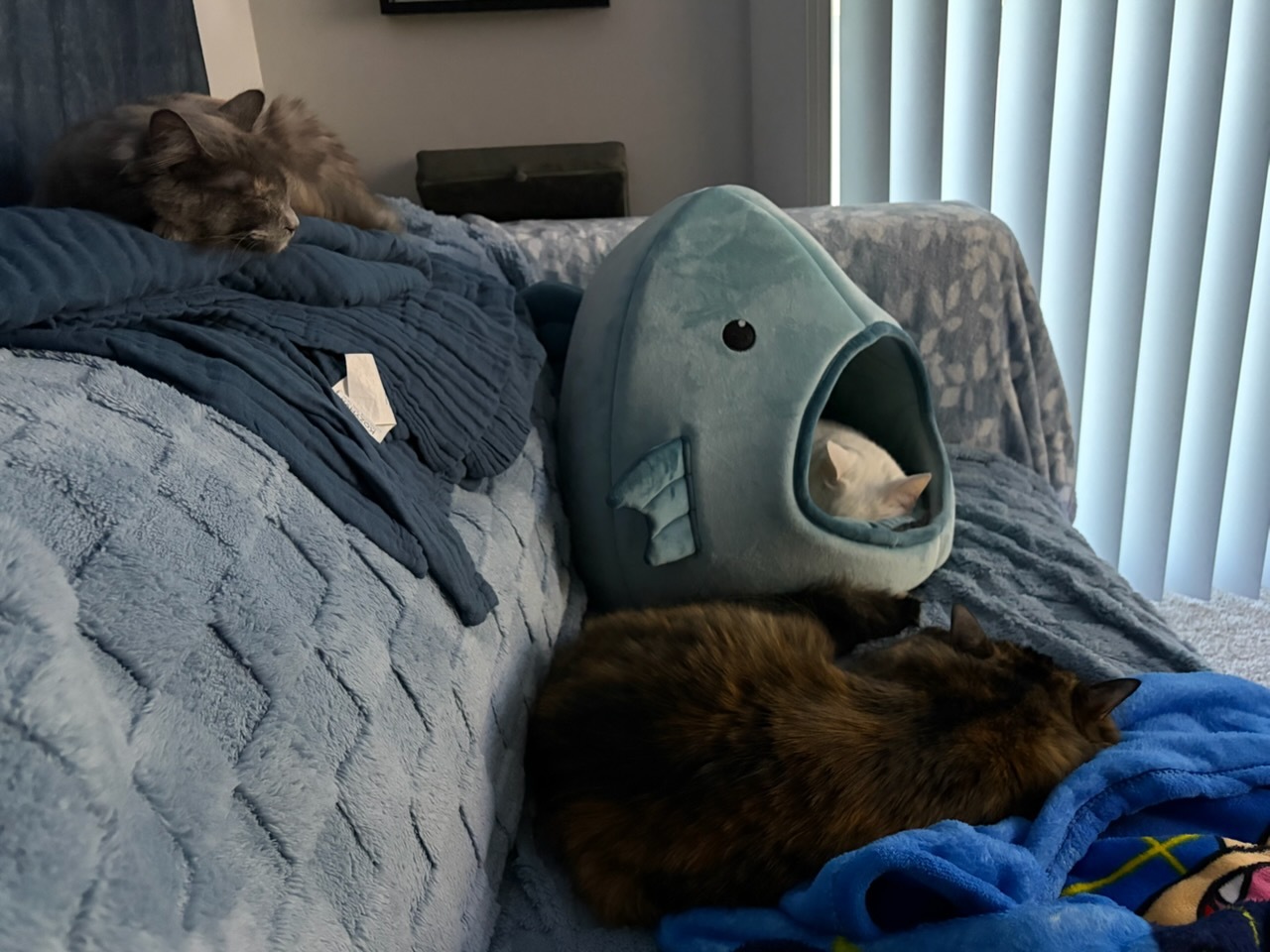
Mid-February: Starting the Introduction Process
During the second week of February, I began a structured scent exchange and desensitization plan.
Twice daily, I used washcloths to exchange scents between Trinket and my established cats. Since Calcifer and Bagel are not especially food motivated, I had to get creative with reinforcement. Rather than using treats, I would sit outside Trinket's bedroom door with the older girls and reward calm behavior with affection whenever they sought it out. Meanwhile, Trinket would often approach her side of the door to investigate the sounds and scents coming from the hallway.
For the next three weeks, we continued scent exchanges and gradual exposure through the closed door. Periodically, I attempted brief visual introductions, but when those sessions proved too stressful, I returned to scent-only work for several days before trying again.
During this phase, I also slowly moved food bowls closer to the separating door. Trinket's food and water started in my closet and gradually moved closer to the doorway. Eventually, all three cats were comfortably eating within approximately ten feet of one another, separated only by the wall and closed door.
March: Expanding Access and Building Positive Associations
By the first week of March, I began phasing out the scent exchanges and introducing supervised exploration sessions.
Calcifer and Bagel would be confined to their safe room while Trinket explored the rest of the house at her own pace. These sessions started at just five to ten minutes each evening and gradually increased to approximately forty-five minutes over the following three weeks.
As Trinket's scent became more familiar throughout the home, I was able to introduce brief periods of visual access and very limited physical access. The difference from those first introductions was absolutely remarkable.
Calcifer and Bagel were now more frequently able to observe Trinket without negative reactions. They began engaging in greeting behaviors such as leaning forward for nose touches and investigative sniffs. Sessions remained short, often only one to five minutes initially, but were gradually lengthened as everyone continued to demonstrate relaxed and tolerant behavior.
Late March: Supervised Physical Interaction
During the last full week of March, I began allowing closely monitored physical interactions.
The goal was not perfection. Minor signs of discomfort, such as an occasional hiss, were allowed as part of normal feline communication. However, if stress levels escalated beyond what I considered an acceptable threshold, I would intervene and separate the cats.
Most often, Trinket was the very enthusiastic instigator. When interactions became too intense, I could usually de-escalate the situation simply by asking the cats to separate or by relocating Trinket to another area of the house.
At this stage, the cats were able to spend supervised time together during the evenings while I was awake. Overnight, however, Trinket continued to stay confined in my bedroom so that all interactions remained under supervision.
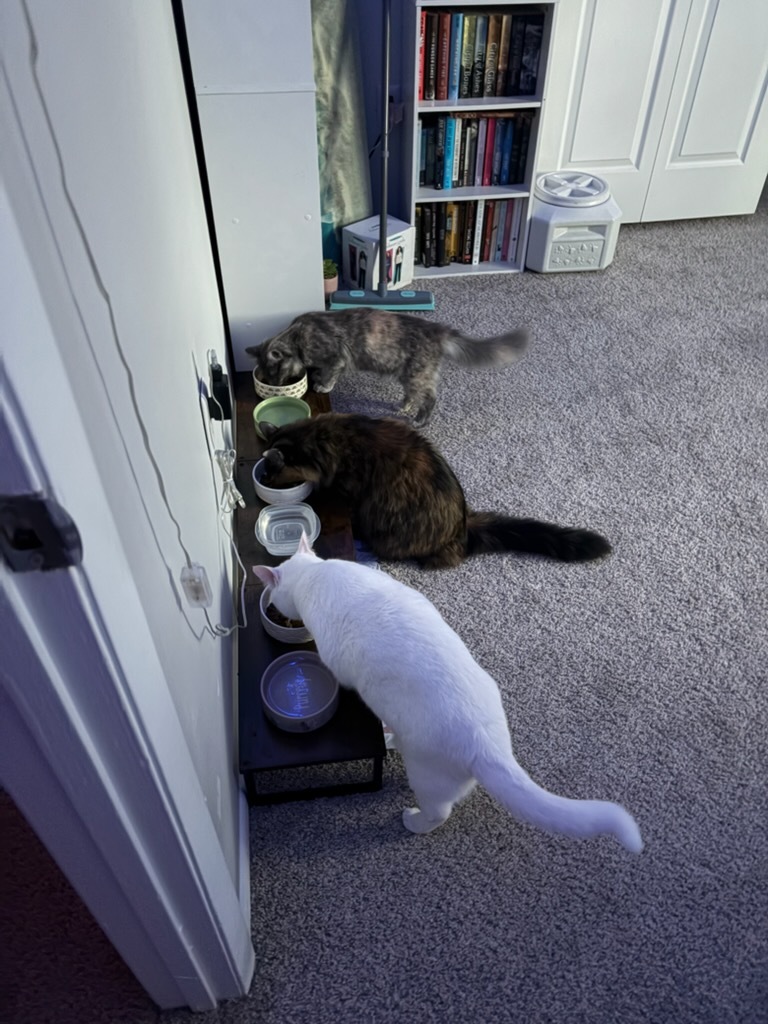
End of March Through Early April: Transitioning to Full Household Integration
As the cats continued to demonstrate appropriate and increasingly comfortable interactions, I began allowing them access to one another overnight with bedroom doors left open.
After another week of successful supervised mingling, I took the next step and allowed all three cats to remain together while I was at work. Like many pet owners, I relied heavily on cameras at first and spent plenty of time checking them throughout the day.
As the weeks passed and the cats continued to coexist peacefully, I gradually reduced my monitoring and allowed them to settle into their new normal.
Looking Back
From the day Trinket came home until all three cats were comfortably sharing the household, the process took approximately two months.
The most important lesson I learned was that successful introductions rarely happen on a straight path. Progress often involved moving forward, taking a step back when someone became uncomfortable, and then trying again at a pace the cats could handle. While it was sometimes frustratingly slow, allowing the cats to set the timeline ultimately created a much safer and more positive outcome for everyone involved.